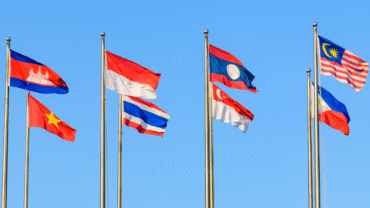
Southeast Asia Global Relations Outlook Part 2: The EU, Japan, and South Korea

Part II of this series situates ASEAN within an increasingly fragmented global environment in which engagement with major external partners is becoming more conditional, differentiated, and strategically consequential. The era of largely frictionless integration is giving way to one defined by tariffs, regulatory standards, supply-chain recalibration, and selective security expectations. As global powers recalibrate their external strategies in response to domestic pressures and geopolitical competition, Southeast Asia has emerged not as a passive arena but as a focal point where economic access, strategic influence, and policy alignment intersect. The following sections examine how key partners—the United States, China, Japan, the European Union, South Korea, India, the GCC, and partners in the ‘Global South’—are reshaping their engagement with ASEAN in 2026, and what this evolving external landscape means for the region’s capacity to sustain agency under constraint.
The full Southeast Asia Global Relations Outlook 2026 report will be published on the website soon.
The European Union: Regulation-Driven Engagement
The Brussels Effect and Regulation-Driven Engagement
The European Union’s engagement with ASEAN in 2026 is increasingly defined by the Brussels Effect: the EU’s ability to shape global production, supply chains, and digital practices through the extraterritorial reach of its regulatory frameworks. Rather than relying on tariffs, discretionary trade defense, or development assistance, the EU exerts influence by setting rules that firms must follow in order to access its market. Once adopted, these rules diffuse outward through global value chains, effectively exporting European standards without formal negotiation.
In this context, instruments such as the Carbon Border Adjustment Mechanism (CBAM) and the EU Deforestation Regulation (EUDR) function less as trade barriers than as mechanisms for regulatory alignment. They embed climate, sustainability, and traceability requirements directly into production and certification processes well before goods reach the EU border, reshaping how and where value is created across ASEAN economies.
CBAM enters its full implementation phase in 2026, requiring importers to purchase CBAM certificates to cover the embedded carbon emissions of covered products, including steel, cement, aluminum, fertilizers, and electricity-related goods. For ASEAN exporters in carbon-intensive sectors, this effectively prices carbon at the EU border and raises the cost of market access unless domestic production processes decarbonize or align with EU monitoring, reporting, and verification standards. Although CBAM is framed as non-discriminatory, its impact is uneven, favoring producers with advanced emissions accounting and regulatory capacity.
The EUDR introduces a parallel compliance challenge for agricultural and resource-based exports. Under the current timeline, large and medium-sized companies must demonstrate deforestation-free supply chains by 30 December 2026, while small and micro enterprises face compliance deadlines by 30 June 2027. The regulation affects commodities central to many ASEAN economies, including palm oil, rubber, coffee, cocoa, timber, and derived products. For ASEAN producers, particularly SMEs embedded in fragmented supply chains, the costs of traceability, geolocation, and due diligence risk becoming prohibitive. As a result, access to the EU market in 2026 increasingly depends not on tariffs or quotas, but on domestic regulatory upgrading and supply-chain consolidation—posing significant adjustment challenges across the region.
The Brussels Effect extends beyond physical goods into the digital economy. The Digital Markets Act (DMA), Digital Services Act (DSA), and forthcoming AI Act increasingly shape platform governance, data practices, and AI deployment far beyond Europe’s borders. While formally applicable only within the EU, these regimes influence global product design, compliance systems, and contractual norms, as firms standardize operations to avoid regulatory fragmentation. For ASEAN economies, this means that participation in EU-linked digital markets increasingly requires upstream regulatory alignment, even in the absence of domestic mandates.
Trade agreements and bilateral momentum
Recent developments in Indonesia and Thailand illustrate a broader shift in the European Union’s trade strategy toward ASEAN: away from ambitious region-to-region agreements and toward selective bilateral pathways with regulatory-ready partners. This approach reflects the EU’s assessment that divergent regulatory capacity across ASEAN, combined with its own expanding sustainability agenda, makes comprehensive bloc-to-bloc agreements difficult to conclude in the near term.
Against this backdrop, the Indonesia–EU Comprehensive Economic Partnership Agreement (CEPA) is widely expected to be signed in early 2026, following progress on long-standing disputes over commodities, sustainability provisions, and market access. If concluded, the agreement would signal that deepened trade relations with the EU remain attainable for ASEAN economies willing and able to align with EU regulatory and environmental standards. Indonesia’s case demonstrates how bilateral agreements can be used to reconcile EU sustainability priorities with strategic engagement in Southeast Asia’s largest market.
Thailand’s trajectory reinforces this pattern. EU–Thailand FTA negotiations, formally resumed after a prolonged pause, have shown steady progress, reflecting renewed political momentum on both sides. While the negotiations remain complex, their revival underscores the EU’s preference for working bilaterally with key ASEAN economies rather than pursuing a single ASEAN-wide framework. Together, Indonesia and Thailand function less as exceptions than as test cases, signaling how the EU is likely to engage ASEAN economically in 2026: deepening ties where regulatory convergence is feasible, while relying on non-tariff measures and unilateral standards elsewhere. For ASEAN, this approach preserves access to the EU’s high-value market for some members, but risks further fragmenting the bloc’s collective trade posture.
Strategic tension
The EU presents its engagement with ASEAN as values-driven, framing sustainability, climate action, and responsible production as non-negotiable elements of economic partnership. While many ASEAN governments share these objectives, the way EU standards are externalized increasingly generates political friction. The pace and breadth of EU regulation risk being perceived less as cooperation and more as unilateral rule-setting, particularly when compliance expectations outstrip local regulatory capacity or domestic political feasibility.
This tension is most visible in how EU rules reshape production incentives across ASEAN economies. Compliance increasingly favors larger firms and more advanced producers, while smaller exporters and agricultural producers face rising barriers to participation. Over time, this risks accelerating consolidation and exclusion within ASEAN markets, creating domestic distributional effects that extend beyond trade policy into rural livelihoods, SME competitiveness, and political economy concerns. These outcomes complicate ASEAN governments’ ability to publicly sustain support for deeper regulatory alignment with the EU.
For ASEAN, the core trade-off in 2026 is therefore strategic rather than technical. Access to the EU’s premium market offers higher value and reputational gains, but at the cost of tighter regulatory discipline and reduced policy space. Unlike U.S. tariffs or China-led integration, EU influence is predictable but difficult to negotiate around, placing ASEAN governments in a position where adaptation is often the only viable option. Managing this tension will require balancing long-term upgrading objectives with short-term economic and political constraints, to ensure that values-based engagement does not translate into structural exclusion.
Japan: Economic Recovery and Manufacturing Re-Engagement
Japan’s Strategic Approach to ASEAN
Japan’s approach toward ASEAN in 2026 will continue to be characterized by predictability, institutional continuity, and a deliberate avoidance of coercive leverage. Unlike the United States’ increasingly discretionary and domestically contingent engagement, and China’s scale-driven economic embedding, Japan positions itself as a stabilizing partner that works through established multilateral frameworks and long-term bilateral partnerships. Tokyo consistently affirms ASEAN centrality, supports rules-based regional order, and engages incrementally rather than episodically, giving Southeast Asian governments a high degree of confidence in policy continuity.
Japan’s engagement is shaped by risk management rather than strategic competition. While tensions with China form part of the regional backdrop, Japan has avoided framing ASEAN cooperation in confrontational terms or pressing alignment choices. Instead, Tokyo emphasizes economic resilience, connectivity, and capacity-building, reinforcing ASEAN’s preference for diversified partnerships and strategic autonomy. This approach allows Japan to deepen influence without triggering resistance, making it a politically low-risk partner for ASEAN states seeking stability amid intensifying major-power competition.
“Sanaenomics” and the Revival of Outward Investment
“Sanaenomics” marks a substantive evolution of Japan’s economic strategy rather than a simple cyclical recovery. Unlike Abenomics, which was primarily designed to escape deflation through aggressive monetary easing and demand stimulus, Sanaenomics reflects a shift toward economic security, strategic resilience, and state-supported investment in priority sectors. The policy framework emphasizes expansionary fiscal measures, targeted industrial support, and closer alignment between economic policy and national security objectives, particularly in areas such as semiconductors, advanced manufacturing, energy transition technologies, and defense-related supply chains.
This shift has direct implications for Japan’s outward investment behavior. Rather than prioritizing cost minimization or short-term returns, Japanese firms—supported by government policy—are increasingly focused on supply-chain reliability, technological control, and long-term strategic positioning. Southeast Asia features prominently in this recalibration. ASEAN economies offer political stability, manufacturing depth, and geographic proximity that align with Japan’s objectives under Sanaenomics to de-risk production while maintaining efficiency. As a result, outward investment is likely to revive in 2026 not as a surge driven by macro recovery alone, but as a structurally anchored redeployment of capital.
Thailand, Vietnam, Indonesia, and Malaysia are well positioned to benefit, particularly in automotive and electric-vehicle components, precision manufacturing, machinery, and logistics and supply-chain services. Japanese investment under Sanaenomics is likely to be gradual and capacity-building in nature, embedding supplier development, skills transfer, and quality control rather than rapid scale-up. For ASEAN, this distinguishes Japan’s re-engagement from both U.S. conditional investment and China’s scale-driven expansion: it offers fewer headline inflows, but greater durability, industrial upgrading, and alignment with longer-term development objectives.
Strategic Implications for ASEAN
For ASEAN, Japan’s role in 2026 lies less in altering the regional balance of power than in preserving strategic space amid intensifying competition. Japan provides ASEAN states with a dependable external partner that supports diversification without imposing alignment costs. This expands ASEAN’s ability to manage exposure to U.S. policy volatility and China-centric dependence, particularly for middle-income members seeking alternatives that do not carry heightened political or regulatory risk.
Economically, Japanese investment under Sanaenomics may help strengthen ASEAN’s long-term industrial foundations rather than delivering rapid headline inflows. The emphasis on supply-chain resilience, skills development, and embedded supplier networks supports incremental upgrading in manufacturing, automotive, and logistics ecosystems. For ASEAN, this enhances resilience at a time when global supply chains are being reshaped by strategic competition and regulatory fragmentation, even if Japanese capital does not match the scale or speed of Chinese investment.
At the regional level, Japan’s continued reliance on ASEAN-led frameworks reinforces ASEAN centrality at a moment when bilateralism is eroding it elsewhere. While Japan cannot offset all external pressures, its engagement broadens ASEAN’s strategic options and reduces the risk that adaptation to major-power competition becomes synonymous with dependence. In this sense, Japan’s strategic value for ASEAN in 2026 is not transformational, but stabilizing—and that distinction matters.
South Korea: Trade Renewal and Strategic Coordination
Trade Renewal and Production Resilience
South Korea’s engagement with ASEAN in 2026 will be anchored in the planned renegotiation of the ASEAN–Korea Free Trade Area (AKFTA), expected to begin in early 2026. Unlike earlier phases of trade liberalization, the renegotiation reflects Seoul’s growing focus on production resilience and supply-chain security amid global fragmentation. The objective is less about expanding headline market access and more about securing reliable production bases and inputs for Korea’s export-oriented industries.
Key sectors include electronics, batteries, and advanced manufacturing inputs, where Korean firms face rising concentration risks and geopolitical exposure elsewhere. ASEAN economies—particularly Vietnam, Thailand, Malaysia, and Indonesia—are well positioned to serve as complementary manufacturing hubs and upstream suppliers. For ASEAN, the AKFTA update offers opportunities to deepen integration into Korean value chains, especially in higher-value manufacturing segments, though benefits are likely to accrue unevenly to economies with stronger industrial ecosystems and regulatory capacity.
Strategic Coordination Beyond Trade and Implications for ASEAN
Beyond trade, the ASEAN–Republic of Korea Comprehensive Strategic Partnership and its new Plan of Action (2026–2030) expand cooperation into areas such as digital transformation, defense-adjacent technology, and human capital development. This agenda emphasizes functional cooperation and capacity-building rather than alliance politics, reinforcing Korea’s positioning as a technology partner rather than a geopolitical patron. Cooperation in digital skills, industrial upgrading, and applied technology aligns closely with ASEAN’s development priorities without imposing heavy political or regulatory conditions.
For ASEAN, South Korea occupies a useful middle space in the regional landscape. Korean engagement offers diversification in technology and manufacturing partnerships without the volatility associated with U.S. trade policy or the scale-driven dependence risks of China-centric integration. At the same time, Korea’s economic footprint remains smaller than that of China, the EU, or Japan, limiting its capacity to act as a standalone anchor. In 2026, South Korea’s strategic value for ASEAN lies not in transformation, but in complementarity—strengthening resilience and optionality within ASEAN’s broader balancing strategy.
News and insights

Southeast Asia Global Relations Outlook Part 2: India, BRICS, and GCC

Southeast Asia Global Relations Outlook Part 2: U.S. and China