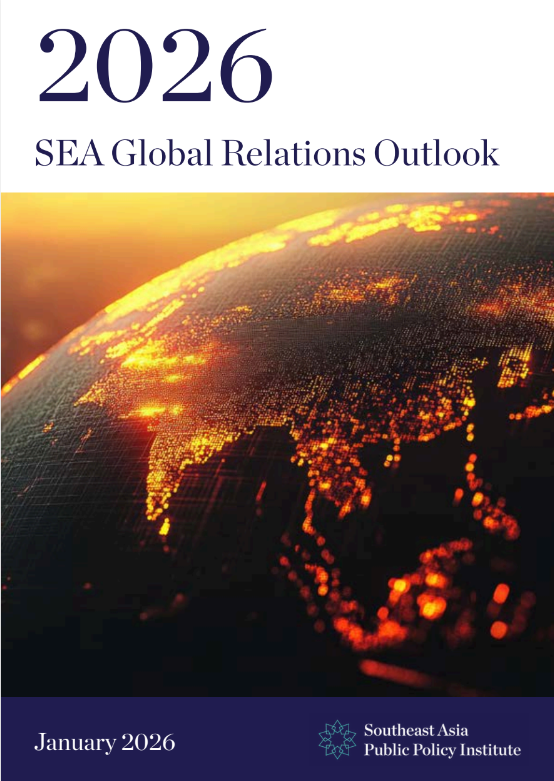
SEA Global Relations Outlook 2026 Report

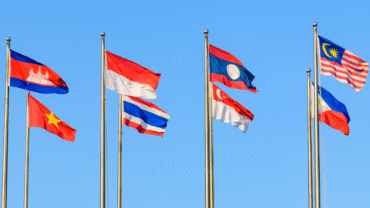
ASEAN in 2026 is no longer operating as a neutral trade hub sitting comfortably between competing powers. It has become a contested economic and strategic space where external engagement increasingly arrives with embedded conditions that shape domestic policy choices and development pathways. Access to major markets and capital is no longer frictionless; it is mediated through tariffs, regulatory standards, supply-chain positioning, and selective security expectations.
These pressures take different forms. The United States applies leverage through tariffs and discretionary trade policy; the European Union projects influence through standards and sustainability regulation; China offers scale and stability alongside deepening dependence risks; and partners such as Japan and India engage through selective security cooperation and industrial or technological alignment. None of these pressures is dominant on its own, but together they narrow ASEAN’s room for maneuver and raise the cost of miscalculation.
In this environment, the central question for ASEAN is no longer who to balance against whom, but how to preserve agency while navigating overlapping and often incompatible external demands. The challenge in 2026 is one of strategic management rather than equilibrium: sequencing commitments, diversifying partnerships, and absorbing pressure without surrendering policy autonomy. ASEAN’s success will depend less on maintaining neutrality in principle than on sustaining flexibility in practice.
Click here to read the full report.
Our Work