
Geopolitics
05 Jan 2026
Southeast Asia Global Relations Outlook 2026 Part 1: 10 Things to Focus in 2026
by Institute
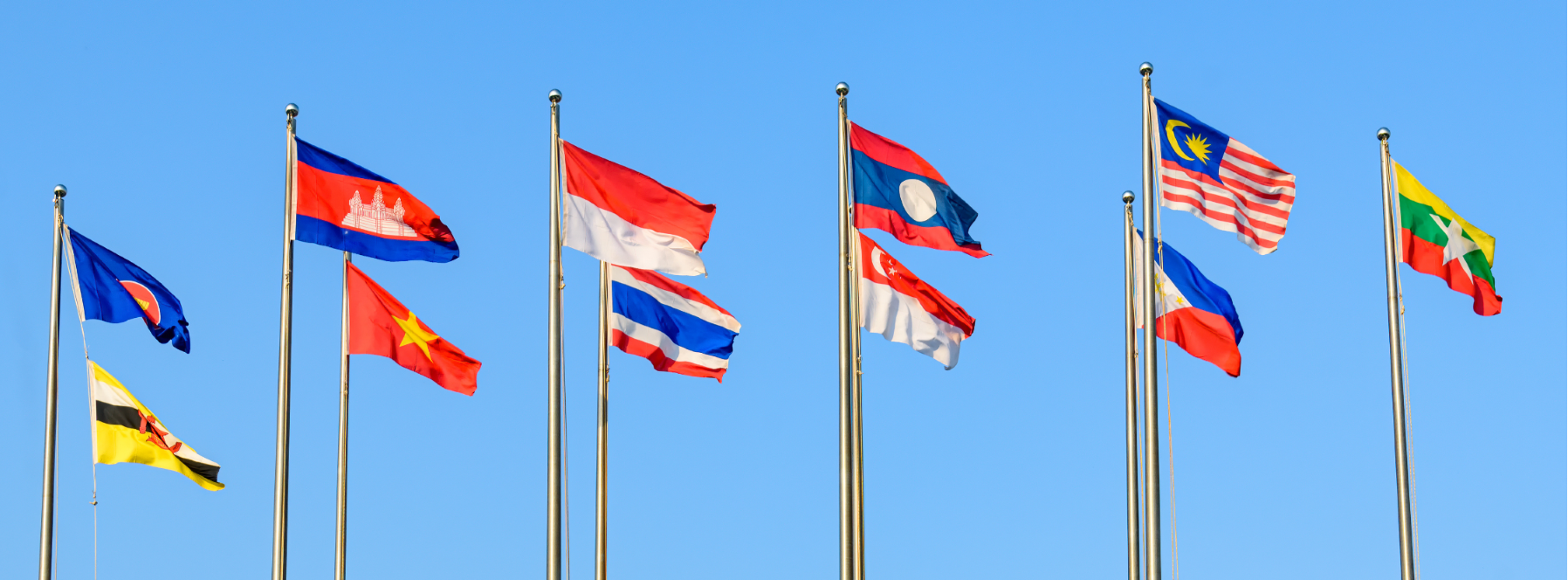
ASEAN enters 2026 facing a more demanding regional and global environment. External pressure from intensifying major power competition is coinciding with persistent internal frictions that test ASEAN cohesion and policy bandwidth. The ten developments below offer a quick snapshot of the issues most likely to shape the regional agenda over the year ahead
- High stakes as Manila inherits the ASEAN Chair in 2026: The Philippines takes over the ASEAN Chair at a moment when the bloc is balancing crisis management with the need to deliver on longer-term integration. Manila inherits a crowded internal agenda, including ongoing instability in Myanmar, renewed Thailand-Cambodia border tensions, and the institutional work required by Timor-Leste’s accession. Externally, the Chair will be closely watched on South China Sea diplomacy and on ASEAN’s ability to keep a coherent posture amid sharper US-China rivalry.
- Trade War 2.0 and the end of easy hedging: For much of the past decade, many ASEAN economies benefited from “China+1” diversification without being forced into clear trade or supply chain choices. That buffer is narrowing. Introduction of reciprocal, tighter scrutiny of origin and transshipment, and stronger local content expectations are raising compliance costs and increasing the risk of being caught in enforcement disputes. The result is a less predictable trade environment where neutral positioning becomes harder to operationalise in practice.
- Southeast Asia as a transnational crime hub: Crackdowns on scam compounds across the Mekong subregion in 2025 did not eliminate the underlying business model, but they did accelerate adaptation and relocation. Operations have shown an ability to shift across borders and rebrand quickly, especially in areas with weak enforcement or permissive local protection. The issue is becoming more diplomatically sensitive as major countries such as U.S. and South Korea intensify law enforcement actions, financial disruption measures, and travel advisories, raising reputational and governance stakes for affected countries.
- Regional digital economy integration and the DEFA test: ASEAN’s Digital Economy Framework Agreement (DEFA) is positioned as a major integration milestone, with expectations of signature in 2026. If delivered as intended, DEFA could reduce friction for cross-border digital trade and help move ASEAN towards a more interoperable digital market. The harder test will be domestic implementation, especially in areas where national approaches diverge, including debate over cross-border data flows and data localisation.
- Future regional energy connection through the ASEAN Power Grid: Cross-border power connectivity is moving from long-running ambition towards more practical implementation, particularly as ASEAN begins the APAEC 2026–2030 policy cycle. The LTMS-PIP initiative has been cited as a proof point that multi-country power trade is feasible, and attention is turning to the next generation of interconnection concepts, including work linked to the BIMP subregion.
- Thailand-Cambodia: unceasing fire: Thailand-Cambodia border tensions intensified in 2025 and remain difficult to contain, partly because both sides face domestic political incentives that make de-escalation costly. Economic measures and political narratives have become increasingly intertwined with security dynamics, complicating the scope for technical solutions. A further risk in 2026 is that external actors become more entangled, adding another layer of uncertainty to what is already a volatile bilateral issue.
- Myanmar’s political unrest: Myanmar’s election timetable, spanning late December 2025 and January 2026, is unlikely to resolve the underlying conflict and may instead reinforce political fragmentation. The broader operating environment remains shaped by continued fighting with ethnic armed organisations, restricted civic space, and a worsening humanitarian situation. For ASEAN, Myanmar will continue to drain diplomatic bandwidth and test the credibility of the bloc’s approach, including its ability to translate stated principles into practical leverage.
- Rare earths in Myanmar and the critical minerals contest: Myanmar has become an increasingly consequential upstream source of rare earths, yet production is concentrated in areas where control is fragmented and armed groups exert strong influence. Competition over critical minerals is likely to sharpen in 2026. China benefits from geographic proximity and cross-border access. The United States has signalled stronger interest in diversifying supply and is exploring alternative approaches to engage with this strategic resource base.
- Malaysia and Indonesia as rising Muslim-majority agenda setters: Malaysia and Indonesia are becoming more visible as agenda setters in Muslim-majority networks, not only through the halal economy and Islamic finance, but also through more assertive foreign policy signalling. Their positions on high-salience geopolitical issues, particularly Palestine, have elevated their profiles beyond Southeast Asia. For ASEAN, this can widen engagement space with Muslim-majority partners and investment flows, while also introducing new sensitivities when other member states prefer lower-profile diplomacy.
- Timor-Leste’s ASEAN accession: Timor-Leste’s admission as ASEAN’s 11th member is symbolically important and has the potential to strengthen ASEAN’s narrative of cohesion and regional inclusion. At the same time, integration will be a sustained capacity test, from meeting participation and legal alignment to the institutional demands of operating across the full ASEAN agenda. In 2026, the key question is whether membership translates into practical economic and governance gains, while avoiding new vulnerabilities.
The full Southeast Asia Global Relations Outlook 2026 report will be published on the website soon.
News and insights

Global21 Jan 2025
Southeast Asia Global Relations Outlook Part 1: Malaysia’s ASEAN Chairmanship
by Institute
Read More
Digital Economy20 Mar 2024
Southeast Asia can play a major role in a global anti-scam alliance
by Institute
Read More